
• Skip to primary navigation
  • Skip to main content
  • Skip to primary sidebar
  • Skip to footer
SketchCop®

SketchCop®

Digital Solutions for Facial Imaging & Identification

  • Home
  • About Us
    • Meet Michael W. Streed “The SketchCop®”
      • High-profile Cases
    • SketchCop® Solutions
  • Solutions
    • Software Apps
      • SketchCop® Software App
      • SketchCop® for the Classroom
    • Services
      • SketchCop® REMOTE
      • Postmortem | Facial Reconstruction
        • Craniofacial Superimposition
      • Age-Progression/Regression
        • Commissioned Historical Age Progressions
      • Facial Comparison and Analysis
        • Facial Comparison and Analysis – Requirements
  • Academy
    • SketchCop® Academy
    • SketchCop® 1-on-1 – Personalized Forensic Art Training
  • SketchCop® Media
    • Press
      • Media Availability
      • Press Archives
      • Podcasts
      • Voice and Print Media
    • SketchCop® Blog
  • Captured Gallery
    • Murder
    • Sexual Assault
    • Kidnapping
    • Deadly Assault
    • Robbery
    • Historical Faces
  • Contact

Uncategorized

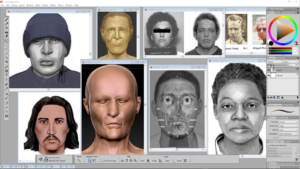
SketchCop® app will soon be available on the web.

February 13, 2024 by Michael W. Streed

Join us as we revolutionize crime-solving!

We’re excited to share that our composite sketch application – SketchCop® – will soon be available as an affordable, subscription-based web app.

Be the first to know when our exclusive pre-launch sale begins and snag our web app at a special early bird rate by subscribing here:

https://dashboard.mailerlite.com/forms/625531/113006290677008292/share

Our new SketchCop® web application will make it easily accessible anytime, anywhere. No software downloads, maintenance, or facial library updates are required; you just need an internet connection and a web browser (Google Chrome) to begin creating faces of crime.

Stay tuned for more updates!
Filed Under: Uncategorized

Police Composite Sketches & COVID-19

May 15, 2020 by Michael W. Streed

Hello Everyone!

With many of us sidelined due to COVID-19, also known as the Coronavirus; you can bet that criminals are still finding ways to scam, rob and steal from us. Although crime is reportedly down across the board, violent crime remains prevalent and is likely to rise post COVID-19.

As a Certified Forensic Artist with 40 years of experience; I have experience assisting law enforcement with investigations that have drawn international interest, along with many that barely made a whisper.

For me, every case is important. The common denominator being the relationship I develop with my eyewitness and law enforcement investigators.

The ability to sit close to the eyewitness to provide strength and comfort is an element of the police composite sketch interview that helps lead to success. Equally important is the professional relationships I’m able to build with investigators.

Before COVID-19 we were all together in close quarters, often less than 6 feet apart. Tears were shed, handshakes were exchanged and sometimes eyewitnesses were so thankful that it wasn’t uncommon to receive an occasional hug.
Today that’s all changed. Social distancing, wearing masks, no physical contact and other stringent guidelines have made connecting with people on a personal level much more challenging. Coupled with police departments closing their lobbies to public access, it makes it even more difficult to schedule and complete a police composite sketch appointment with an eyewitness.

Five years ago, long before COVID-19 reared its ugly head, I was already providing remote, online police composite sketch interviews using online meeting software. Leveraging communication technology allowed me to quickly and easily connect with eyewitnesses, minus the physical presence. In a majority of these cases I’m thousands of miles away.

Despite the distance, I’m able to create successful police composite sketches and provide the same services as if I was there onsite.

Investigators readily embrace the concept because they can request a police composite sketch and conduct their investigations while they wait for me to make the appointment and later e-mail them the completed sketch. Often times within the same day.

Busy eyewitnesses enjoy the safety and convenience, often times logging into a remote police composite interview session from their smartphones. Or if they prefer, from the safety and comfort of their home or office.

For years there’s been the belief that the police sketch artist needs to be in the same room as an eyewitness to judge their veracity and gauge their emotion. That couldn’t be further from the truth.

In addition to providing law enforcement agencies with remote police composite sketches, I’ve been able to train police departments and students from around the globe without having to step foot in their country.

I’ve also been able to upload 3-D files and create skull models of homicide victims for facial reconstructions without compromising evidence. Age progressions, postmortem images, 1-to-1 facial comparisons and analysis, image enhancement, photo-lineups and any other forensic facial imaging can be done remotely simply by uploading and downloading files and photos.

Our investment in technology makes this an effective, affordable solution for law enforcement without having to make the investment themselves. As a matter of fact, my company, SketchCop® Solutions provides contract forensic facial imaging services with two of the nation’s largest and most historically significant police departments.

COVID-19 will change the way we interact socially. How we move forward to effectively fight crime depends on how we use our imagination; including how far we allow ourselves to think outside the box or how far we’re willing to wander outside our comfort zones.

Since we won’t be going back, it’s time to move forward. I’m not waiting. I hope you aren’t either.

Please feel free to reach out if you have any questions about our products and training.  So until next month, be safe, stay well and as always – KEEP ON SKETCHING!

Filed Under: The SketchCop® Blog, Uncategorized

Do you know your Devil Next Door?

November 15, 2019 by Michael W. Streed

When I’m not working on active cases for law enforcement, I enjoy relaxing in the early evening hours watching true crime documentaries that involve unusual topics. And if they include an element of forensic facial imaging, I’m ‘all in’.

Such was the case with Netflix’s 5-part documentary, The Devil Next Door.

The series profiled John Demjanjuk, a Ukrainian auto worker and naturalized U.S. citizen living in Cleveland with his family. In the 1970’s the United States government identified Demjanjuk as a Nazi SS member during World War II.

War records and testimony from death camp survivors identified Demjanjuk as “Ivan the Terrible”; a feared SS guard at the Treblinka Concentration Camp.

While at Triblenka, Demjanjuk, was accused of being responsible for the torture and murder of over 1 million Jewish prisoners during World War II.

Stripped of his United States citizenship, he was deported to Israel where he was prosecuted for war crimes. From there began a legal odyssey spanning 3 countries over a period of several decades. Those who enjoy legal procedure will be interested to see how these different courts treat eyewitness testimony and evidence. Not to mention, the competing political interests involved.

But, that’s where I’ll stop, lest I spoil it for you.

Besides, with five parts and so many twists and turns, I won’t be able to do the story justice. You’ll have to see it yourself.

What I will talk about – briefly, is the role that facial comparison and analysis played during the trial in Israel.

During the investigation, a Nazi identification card surfaced in the name of Ivan Demjanjuk. (Photo on left.) It was thought by some to be a counterfeit document manufactured by the Soviet Union.

But, when compared to a driver’s license photo (Photo on right.) later issued to the accused, John Demjanjuk, you can see a resemblance.

Was this a case of a harmless doppelganger? Or, a carefully crafted bogus ID setting up Demjanjuk as an unwitting dupe?

I guess the answer depends on which side of the argument that you’re on.

During the trial, two experts, a Dentist/Professor with a background in anthropology and a facial

identification expert from the German Police, both reached the same conclusion that they were in fact the same person.

At that time there was very little, if any training at all, in forensic facial comparison and analysis. Today, there are courses conducted by the Federal Bureau of Investigation, private defense contractors and facial recognition system vendors.

Forensic organizations that research and validate methods are currently working on standards for training and best practices.

For more information, visit: https://fiswg.org/index.htm

These cases are difficult because the photos are often poor quality and off-pose. There is also much expectation that comes with a rendered expert opinion.

In 2015, I was called upon to participate in a History Channel documentary detailing the 1962 escape from Alcatraz by Frank Morris and brothers John and Clarence Anglin. Photographic evidence had surfaced suggesting that the Anglin brothers had survived the dark, cold trip across the San Francisco Bay. My opinion was that it was “highly likely that the new photographs were in fact the Anglin brothers and that it appeared as if they survived.

When asked off-camera if I could make a positive identification; I explained that absent fingerprints, dental x-rays or DNA, nobody could prove positively from a photograph.

Yet, photographs are in themselves compelling evidence. Especially, if there is a strong resemblance backed up by the opinion of a trained expert.

In the Demjanjuk case I recommend you tune into Netflix to view the evidence and eyewitness testimony.

All-in-all it’s an interesting portrayal of a case that has many twists and turns. It’s a great binge-watch if you have time.

In the end you will be left wondering – was Demjanjuk a cold-blooded mass murderer? Or was he the quiet dedicated auto worker and family man introduced in part one of the series?

I guess you’ll have to decide for yourself. I would be interested in your opinion.

Feel free to e-mail me at: Michael@SketchCop.com and let me know.

Filed Under: The SketchCop® Blog, Uncategorized

Baltimore “SketchCop” helps police picture suspects

March 4, 2018 by Michael W. Streed

Nowadays it’s hard to go anywhere without being seen on cameras or cellphones but when there’s a crime the lens doesn’t catch that’s when Baltimore Police call Michael Streed, also known as the “Sketch Cop.” WMAR-ABC2 News Baltimore’s Mallory Sofastaii talks to Michael W. Streed about his career as Baltimore Police Department’s first full-time forensic artist.

Filed Under: In the News, Uncategorized

Where do we go from here?

June 13, 2016 by Michael W. Streed

silo

When I began my career as a police sketch artist, there was only a handful of people doing the job.  Even then, few were full-time.  Most of us were beat cops or detectives.   We enjoyed being cops, but we also enjoyed using our drawing skills to help catch more bad guys.

Armed with nothing more than a pencil, pad of paper and an eraser, we went to work.  At the time, that is all we had.  It was low-tech, but it worked out pretty well.  As a result of our efforts, many dangerous criminals were identified and sent to jail.

Fast forward to today and forensic artists have an array of software tools at their fingertips.  The traditional pencil, paper and eraser combination has been supplemented by electronic tablets, input devices and art-centric software.  This has not only made our jobs faster and easier, but it also opened up other opportunities to enhance our skills.

I was an easy convert.  For years I have been working with Adobe® Photoshop® digital imaging software and using Wacom Technologies’ pen/tablet as my favored input device.  (My first tablet was a small Wacom Graphire.)

As technology continues to advance, so does the field of forensic art.  With software like our SketchCop® FACETTE Face Design System software, paired with Adobe® Photoshop®, Wacom Technologies and Corel, we are opening the field to non-artist who have the desire to create faces and help their communities.

Armed with the right tools and training, another category of identification specialist will soon be added to the mix – the Facial Identification Technician.  Having trained technicians at the ready will ensure that law enforcement has the right tools to identify more criminals.

SketchCop Solutions continues to lead the field of forensic facial imaging by providing relevant training and solutions for law enforcement and academics.  Please check back with us as we continue to look at some of these new tools and announce upcoming training opportunities.


Filed Under: The SketchCop® Blog, Uncategorized

Troy, MI Police Department is now using SketchCop FACETTE to fight crime!

March 28, 2016 by Michael W. Streed

TroyPDSketchCop Solutions is pleased to add Troy, MI Police Department to our list of valued law enforcement clients.  Like many police agencies, they were frustrated by the lack of quality facial composite software programs.  They wanted a program that was versatile, easy to use and had a training component that supported the software.

Troy Police Department took the extraordinary step of inviting The SketchCop himself to their department to provide specialized training.  The training included interviewing techniques, courtroom testimony, software basics, how to use Adobe Photoshop, practical exercises and much, much more.

The Troy Police Department hosted the 2-day training course in their state-of-the-art training facility and were wonderful hosts.  SketchCop Solutions hopes that integrating SketchCop FACETTE into their arsenal of forensic evaluation tools will help them catch more crooks.

To see how you can get your own copy of SketchCop FACETTE and onsite/online training, be sure to contact us today!


Filed Under: The SketchCop® Blog, Uncategorized

  • Page 1
  • Page 2
  • Page 3
  • Page 4
  • Go to Next Page »

Primary Sidebar

Archives

Categories

  • Capture
  • In the News
  • Press
  • The SketchCop® Blog
  • Uncategorized

Footer

SketchCop Solutions, Inc.

4160 Temescal Canyon Rd.
Suite 401
Corona, CA 92883 USA

  • © Copyright 2026 SketchCop®. All Rights Reserved.
  • • Privacy Policy
  • Created with ✨ by Moxie Design Studios
Scroll Up