
• Skip to primary navigation
  • Skip to main content
  • Skip to primary sidebar
  • Skip to footer
SketchCop®

SketchCop®

Digital Solutions for Facial Imaging & Identification

  • Home
  • About Us
    • Meet Michael W. Streed “The SketchCop®”
      • High-profile Cases
    • SketchCop® Solutions
  • Solutions
    • Software Apps
      • SketchCop® Software App
      • SketchCop® for the Classroom
    • Services
      • SketchCop® REMOTE
      • Unidentified Remains_ID
  • Academy
    • SketchCop® Academy
    • SketchCop® 1-on-1 – Personalized Forensic Art Training
  • SketchCop® Media
    • Press
      • Media Availability
      • Press Archives
      • Podcasts
      • Voice and Print Media
    • SketchCop® Blog
  • Captured Gallery
    • Murder
    • Sexual Assault
    • Kidnapping
    • Deadly Assault
    • Robbery
    • Historical Faces
  • Contact

The SketchCop® Blog

Me and the 3 Kings of Forensic Art

July 28, 2018 by Michael W. Streed

The concept of using facial composite assembly systems to create criminal composites is not new.  Over the years, it’s been a hard-sell for companies who dabbled in the technology and tried to market their creations to law enforcement.

In my opinion, facial composite assembly systems, whether mechanical, or software-driven, fell short because forensic artists were rarely involved in product development. The failure of these facial composite assembly systems to gain a solid foothold in law enforcement left forensic artists feeling pretty confident about their own work. Still, I always believed a better solution was out there and I was determined to find it.

During my journey to create a better facial composite software solution, I was thankful to have met and trained under three veteran forensic artists who themselves were involved in developing and implementing forensic facial imaging software programs. These men helped shape my world view of the discipline and influenced me to push the envelope and embrace a technology solution.  They were great mentors and I want to take a brief moment to introduce them to you.

Fernando Ponce – Los Angeles Police Department

Fernando Ponce, a classically trained painter, held the job title – Police Composite Artist for many years before retiring in the mid 1990’s. I first met Ponce in 1979 when I attended a forensic art course he taught. Afterwards, we struck up a friendship that lasted several years. He shared his dream with me of creating a facial composite software program to help officers manually construct composite images. Unfortunately, he was such a perfectionist; he never completed the program. The technology at the time didn’t live up to his strict image standards.

Tom Macris – San Jose Police Department

Tom Macris was trained and educated as a commercial artist before joining the San Jose Police Department.  I was lucky to have met him on a couple of occasions and marveled at his talent

During Tom’s career he partnered with Visatex Corportation to create Compusketch, a facial composite software program.  Although, one time a popular software for law enforcement,  it eventually disappeared off the market.

Horace Heafner – Federal Bureau of Investigation

I met Horace in 1984 during an F.B.I. police artist conference I attended at the F.B.I. Academy.  Horace’s career at the F.B.I. spanned over 40 years. After leaving the bureau, Heafner worked at the National Center for Missing and Exploited Children where he helped pioneer their model Age Progression program.  Horace quickly adapted to the software blending the new tools with his art skills & training to become a sought after expert on the subject of computerized age progression.

All three men pioneered the emergence of technology in the field of forensic facial imaging.  Though passionate about their work, they never allowed themselves to become affected by their own celebrity status. Each of them had enough humility to keep an open mind about developing technology and the role it would play to transform the discipline. I know they transformed the way I approached the discipline. I can only hope that I do half the job they did in moving the yardstick forward in the field of forensic facial imaging.

To learn more, please visit: www.SketchCopAcademy.com

Filed Under: The SketchCop® Blog

How I Made My Own Move from Pencils to Pixels

June 25, 2018 by Michael W. Streed

After years of endlessly sharpening pencils and breathing eraser dust, I’ve discovered a tool that’s made me a better artist. The funny thing is, it’s not much different than a pencil and in the user’s hand, works magic. Why? Because it’s digital

Let me take you back, nearly 40 years ago when I first became a forensic artist. Back then, all I had was a sharp #2 pencil and a piece of cheap, white, copy paper. It wasn’t always the best tool, but even more daunting a task was making image alterations. For example, if you wanted to add a hat, or other artifact to your sketch, you used tracing paper on sheets of acetate. For photos, it was smelly chemicals and Q-tip sticks.

When I first discovered computer graphics in the late 1980’s things were better, but still a bit awkward. To create art in a digital environment required me to clumsily clutch a computer mouse and drag it around my desktop. Unfortunately, the technology just wasn’t there yet.

Once pen styluses with tablets and graphic display devices were introduced, the new technology made much more sense. It was exciting! From the beginning, I believed it would become an indispensable tool that everyone could use.

Although most of us have gotten used to using a mouse, is it really the best tool to use? If you take a moment to think about it, the proposal I’ve outlined below makes much more sense.

We all learned from an early age to write our name using a pencil. Even today, those without artistic skills are likely to sit and doodle during prolonged periods of boredom. And because the pen stylus looks, feels and acts like a traditional pencil, it’s much more intuitive than a computer mouse, making it the perfect tool for artists and non-artists alike!

My flirtation with digital drawing started when I bought a small Wacom pen tablet. It was the perfect desktop size that easily connected to my old laptop computer. I used it for many years, pairing it with Adobe® Photoshop®.

As technology evolved, pen devices became more expensive to acquire for most.

In 2011, I was hired as Baltimore Police Department’s Forensic Artist. Despite my previous experience, I was still an analog artist. Even though I had a desktop computer, I didn’t have the correct software programs. Using a pencil seemed like a primitive solution when compared to what others were already using. But, that’s all I had to work with

Even though it worked well enough, I wanted more. So, in 2015 I finally made my move from pencils to pixels.  Armed with a pen computer, provided by Wacom for evaluation purposes, and the proper software I went digital. My recommendation is that you all go digital too.

On a related note, this month, we’re releasing our latest course – Why & When To Create A Facial Composite. At only $29.00 it’s the perfect course to help you become a more valuable resource for investigators.

Over the coming months, we’ll start offering training to show you how to use this wildly effective tool!

In the meantime, keep reading our newsletters to learn about upcoming training so that you too can become, Stylus Dangerous™!

Filed Under: The SketchCop® Blog

What is SketchCop® Solutions?

May 18, 2018 by Michael W. Streed

Many of you have seen the name, SketchCop® Solutions bouncing around the internet. This month, I thought I would share the meaning of the title, our logo and what it represents.
Brand establishment is important to companies and individuals. This includes my company – SketchCop® Solutions, Inc. We are a California-based corporation that provides forensic facial imaging products, services and training. SketchCop® is my trademarked, personal brand dedicated to becoming the Digital Difference in Facial Imaging and Identification. I’m also a published author.

I developed the name SketchCop® as a hybrid term used to explain what I did for a living. At the time, I was a police officer who sketched wanted criminals. I wanted something catchy, as I was already thinking about my personal brand. Combining, Sketch and Cop, seemed to me the easiest and most understandable way to create the new term.

Next, I designed a logo. The original SketchCop® logo has evolved over the years. What’s remained consistent was the background image. One of my career cases was the 1997, Beaumont, CA, kidnapping and murder of Anthony Martinez. It was a case that went cold for eight years until a suspected serial killer was arrested and charged in Anthony’s murder.

The suspect represents why I do this work. His intense gaze matched my determination to bring people like him to justice, so it was decided to use his eyes in my logo.

The puzzle piece was the result of a statement I have repeated many times that a composite sketch is but one piece of the investigative puzzle. I noticed that my peers often used the split image of a skull and a composite sketch to form their logo. I wanted mine to be distinctive and separate from the rest.

Now, with a catchy name and distinctive logo, I was off to establish my brand.

During my career, I was fortunate enough to study with the best and most experienced people in the business. After my training I got right to work and it wasn’t long before I was enjoying successes of my own.

I was also exposed to various facial composite software products that other companies marketed and sold to law enforcement. In some cases, the products weren’t very good and never enjoyed the support of the forensic art community. But, I was always a tech junkie and was fascinated by these products no matter how good or bad they were.

As technology became better and the demand increased for software-driven facial composites, I decided to create my own products, write my own books and synthesize my training into a method that I found successful. This helped give birth to SketchCop Solutions, Inc. and eventually SketchCop® Academy.

With all the elements in place, SketchCop® Solutions, Inc. and the SketchCop® Academy hopes to become an influencer in how law enforcement creates and distributes facial images in the future.

Considering the above, what is YOUR brand and how will you establish it? It’s surely something to consider. In the meantime, please join us. Sign up today at www.SketcCopAcademy.com and let’s catch some crooks!

Filed Under: The SketchCop® Blog

Helping Police Unmask(ing) A Killer

April 16, 2018 by Michael W. Streed

Working with the media can be an exciting opportunity for forensic artists. It’s a great way to showcase your work and increase both your credibility and professional standing.

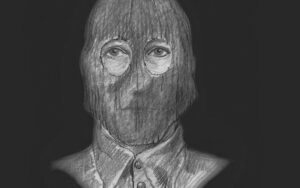
I recently appeared in HLN’s “Unmasking A Killer”, a frightening story of California’s Golden State Killer, a prolific serial rapist/killer who’s evaded capture for over 40 years.

During the series, I was asked my expert opinion on several composite sketches created during the investigation, including three the F.B.I. felt were most representative of the killer’s appearance. The series also featured interviews with other forensic experts, detectives who worked on the case and most important, surviving victims and their family members.

To provide context to the story, The Golden State Killer surfaced in 1976. He was a serial rapist terrorizing Sacramento-area communities. Over the next several years, he roamed California evolving from a serial rapist to a serial killer of men and women. By the time GSK stopped, he racked up 12 murders and 51 sexual assaults. Since 1986, there hasn’t been a crime attributed to him.

With the exception of a couple of taunting phone calls, he seems to have vanished into thin air. Since then, he’s become arguably the most prolific serial killer in the United States

If you’re a forensic artist who does significant work on a high-profile case, like The Golden State Killer, chances are, you’ll  be asked to appear in the media too.  When you do, it’s important that you present yourself in a professional manner. How you present yourself speaks to your personal brand.

I’ve been lucky enough to be on television and print media quite a bit during my career. I’ve made some mistakes, but I learned much along the way. Below I’ve listed some tips that I think you’ll find helpful when appearing on television.

  • Pay attention to your physical appearance

  • Speak clearly

  • Look at the camera

  • Stick to your area of expertise

  • Stay positive, don’t be critical of other experts

Seeing yourself in print, or on TV is exciting. Extending your influence via social media is also becoming more common. Posting on the various social media platforms presents a different set of rules. Some of them, I’ve listed below.

  • Refrain from political/religious commentary

  • Don’t post offensive cartoons

  • Do post photos of you at work

  • Post photos of your work

Once you appear on television you’ve taken the first step to becoming a public figure. If you’re in the media enough, you may get recognized around town.

In retrospect, I think being on the front page of the newspaper or on TV, is better than being on a wanted poster, don’t you? Just remember, when all the attention dies down, you’ll still be where you’ve always wanted to be. Doing the work you love … in the service of others.

Not a bad way to make a living if you ask me.

To learn more, you can buy my book, Creating Digital Faces for Law Enforcement (Academic Press) where I dedicate a chapter to media issues.

Filed Under: The SketchCop® Blog

Behind the Scenes – A Day in the Life of a Forensic Artist

March 17, 2018 by Michael W. Streed

Those of us employed as Forensic Artists, either by a law enforcement agency, or as a private business offering forensic services, work hard behind the scenes providing investigative support for detectives.
 
As a full-time forensic artist with the Baltimore City Police Department, most of my time is spent creating composite sketches for detectives. Every so often I receive a call for help with an unidentified body. But most of the time, I handled requests for assistance with street robberies, non-fatal shootings, sexual assaults or any other felony that typically lands on the desk of a big-city detective. Though it might sound routine and predictable, it’s anything but.
 
Those of you who are fans of television police procedural programs have probably watched their fictitious forensic artist, working quietly behind the scenes, helping a victim create the face of someone who just finished brutalizing them.
 
They always make the job look easy.  Unfortunately, it isn’t.
 
For those of you curious about how a real forensic artist spends their day; I thought this month would be the perfect time to invite you behind the scenes and share my typical day with you. Follow me into my ‘face factory’ and see what it’s like being a full-time forensic artist.


My day begins with a review of area newspapers and media reports of crimes that occurred overnight. Afterwards, I log into my computer and examine cases recently assigned to precinct detectives. If I don’t receive any requests on crimes I think might benefit from a composite sketch, I’ll send a reminder e-mail to the assigned detective letting them know of my availability.  If there isn’t an immediate response, I work on other projects.
 
For example, this month, I have a facial reconstruction that I am completing with the help of experts, using specialized 3d sculpting technology. After a couple of hours sculpting, I’ll stop to prepare material for upcoming training. When finished, I consult with my software programmers who are putting the final touches on a bilingual version of my company’s latest facial composite software program.
 
Just when I thought it was time to breathe, an e-mail arrives from the media, or a new client has called asking for an age progression. Outside of my work as a forensic artist, I am also an author, so there are contracts to review, marketing to take care of and new cases to consider writing about.
 
As my day draws to a close, I’m left putting the finishing touches on soon to be completed projects, while considering new requests for services from law enforcement agencies and private entities. After an evening break to eat dinner and spend time with family, I head back to the office to check e-mails and contact international clients one more time before heading off to bed.
 
Busy? Yes. But, I wouldn’t have it any other way.
 
As you can see, there is so much more going on behind the scenes in the life of a forensic artist than what’s depicted on TV. Each day is different. Some activity you have control over, some you don’t. But, if you ask anyone who works as a forensic artist, they would probably agree with me when I say that I wouldn’t have it any other way. For me it’s too rewarding a job to see any downside.
 
I hope after reading this month’s blog entry, each time you see a composite sketch in the media, you’ll know there’s someone else’s face behind it.

Who knows? Someday, it might be yours! I hope so.

Oh, one last thing before I sign off. I want to personally invite all of you to enroll in my first online course. I’m getting ready to launch it to the general public through our SketchCop® Online Academy! As a subscriber to our newsletter, you can download the course for a special introductory price–only $27. (Hint: Sign up for our newsletter at SketchCop Academy Online)

For a sneak peek, check out the FREE lecture preview. 

Last, but not least, those of you who are new to our newsletter, can catch up on those you misses by clicking here.

Thanks again for stopping by. I hope you enjoyed this month’s blog post. Please let me know if there are any special topics you’d like me to share.

In the meantime, that’s all for now. Be safe and keep on sketching!


Filed Under: The SketchCop® Blog

Baltimore “SketchCop” helps police picture suspects

March 4, 2018 by Michael W. Streed

Nowadays it’s hard to go anywhere without being seen on cameras or cellphones but when there’s a crime the lens doesn’t catch that’s when Baltimore Police call Michael Streed, also known as the “Sketch Cop.” WMAR-ABC2 News Baltimore’s Mallory Sofastaii talks to Michael W. Streed about his career as Baltimore Police Department’s first full-time forensic artist.

Filed Under: In the News, Uncategorized

  • « Go to Previous Page
  • Page 1
  • Interim pages omitted …
  • Page 5
  • Page 6
  • Page 7
  • Page 8
  • Page 9
  • Interim pages omitted …
  • Page 11
  • Go to Next Page »

Primary Sidebar

Archives

Categories

  • Capture
  • In the News
  • Press
  • The SketchCop® Blog
  • Uncategorized

Footer

SketchCop Solutions, Inc.

4160 Temescal Canyon Rd.
Suite 401
Corona, CA 92883 USA

  • © Copyright 2026 SketchCop®. All Rights Reserved.
  • • Privacy Policy
  • Created with ✨ by Moxie Design Studios
Scroll Up